
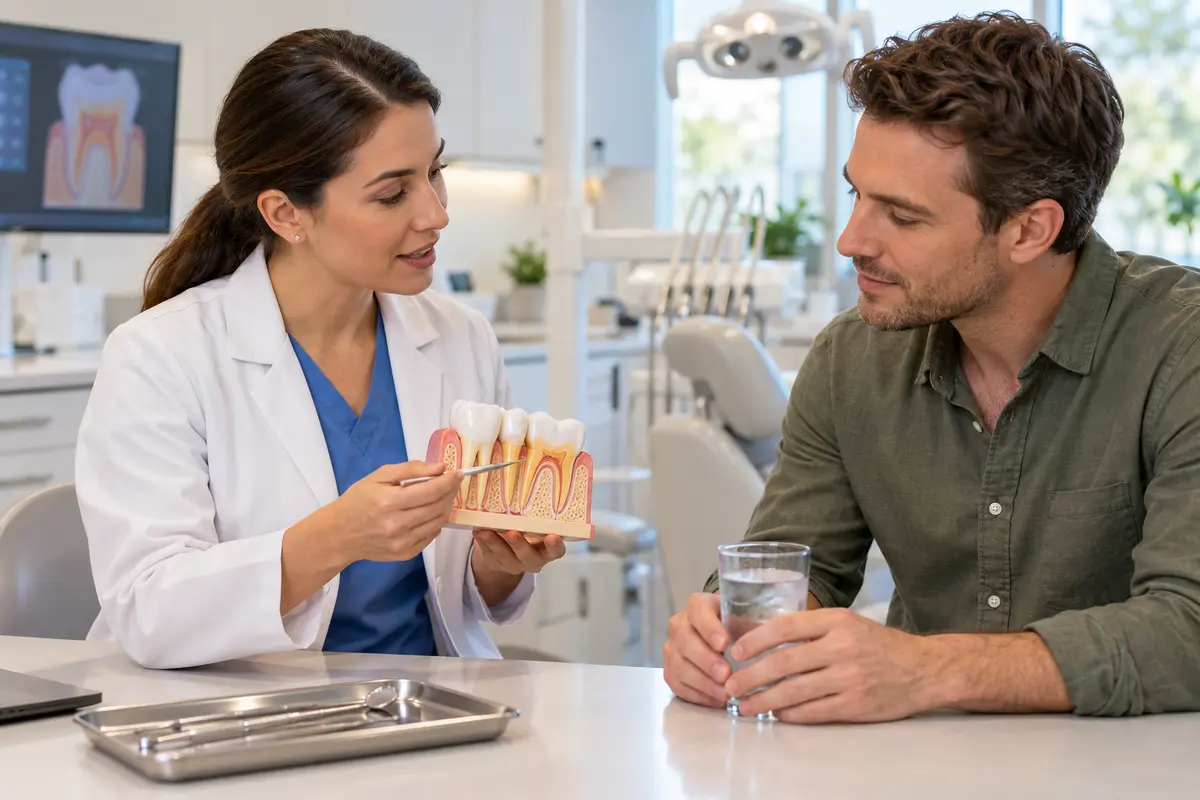
A short sharp pain from cold, heat, sweets or brushing may be tooth sensitivity. Sensitivity is a symptom, not a diagnosis. It can result from exposed roots, worn enamel, decay, a crack or another problem.
Why do teeth become sensitive?
Dentine beneath enamel contains microscopic channels that carry stimuli towards the centre of the tooth. When dentine is exposed by gum recession or enamel wear, the tooth may react more strongly.
Common causes
- receding gums and exposed roots;
- brushing too hard;
- acidic foods and drinks;
- tooth grinding and wear;
- decay, cracks or leaking fillings;
- temporary sensitivity after cleaning, fillings or whitening.
What can you do at home?
Use a soft brush with light pressure and a fluoride toothpaste for sensitive teeth. After acidic food or drinks, rinse with water and wait about 30 minutes before brushing. Avoid abrasive home-whitening remedies.
When should you see a dentist?
Book a check if sensitivity starts suddenly, affects one tooth, lingers after the stimulus or becomes stronger. Night pain, throbbing or pain when biting also needs assessment. Facial swelling, fever or swallowing and breathing difficulty requires urgent help.
How is sensitivity treated?
Treatment depends on the cause. Options include fluoride or desensitising agents, covering an exposed root, treating decay, improving brushing technique or using a night guard for grinding.
Frequently asked questions
Does sensitivity always mean decay?
No, but decay is one possible cause.
Does sensitive toothpaste repair the tooth?
It can reduce nerve stimulation but cannot repair a crack, deep decay or infection.
Can whitening make sensitivity worse?
It may cause temporary sensitivity. The cause should be assessed before whitening.
If sensitive teeth affect eating or persist, book a check-up through the Denslux contact page.