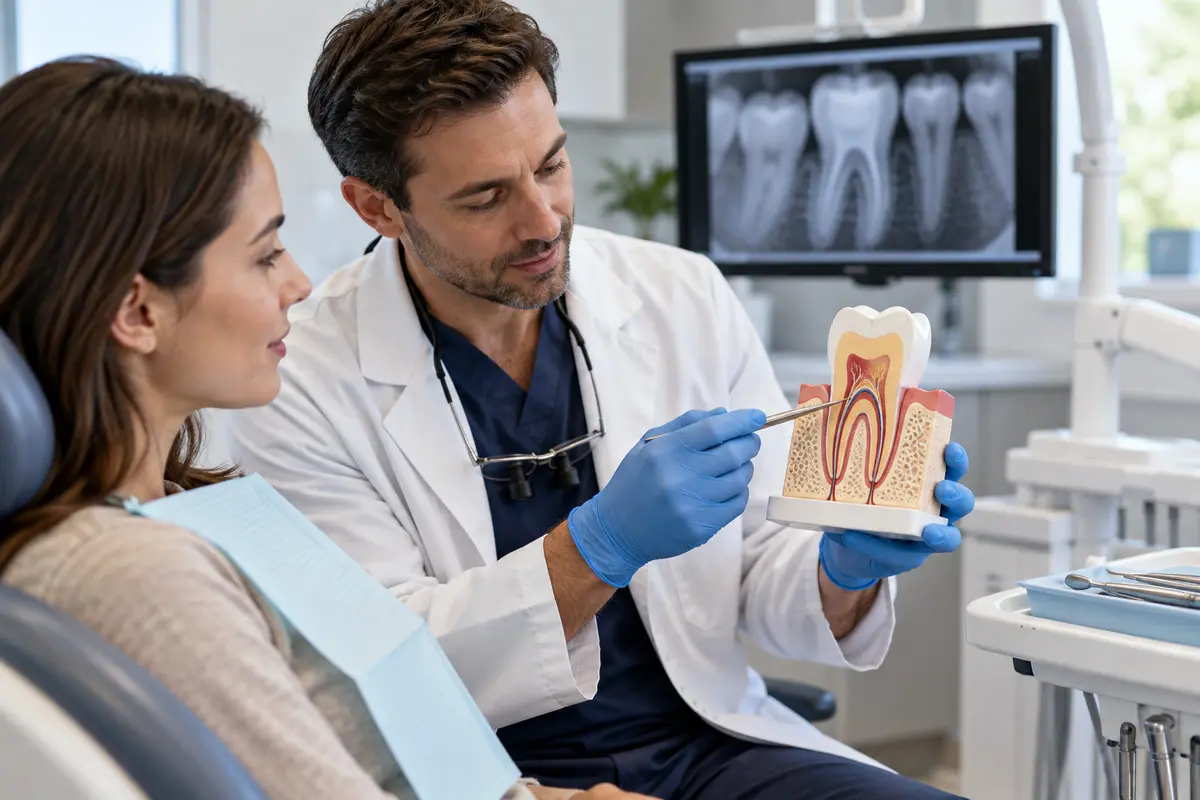
Root canal treatment removes inflamed or infected tissue from inside a tooth, cleans the root canals and seals them. It can often preserve a natural tooth that might otherwise need extraction.
When is treatment needed?
Deep decay, a crack, trauma or repeated dental work can inflame or infect the pulp. Signs may include severe toothache, lingering sensitivity to hot or cold, pain when biting, swelling or a small gum pimple. Some infections cause few symptoms and are found on an X-ray.
What happens during treatment?
- The tooth is examined and imaged if needed.
- Local anaesthetic is given and the tooth is isolated.
- Inflamed tissue is removed.
- The canals are cleaned, disinfected and shaped.
- They are filled and sealed.
- The tooth is restored with a filling or crown.
A dental microscope can improve visibility in complex cases.
Is root canal treatment painful?
Modern treatment is normally performed under local anaesthetic. The tooth may feel tender when biting for a few days afterwards, but discomfort should generally improve rather than become worse.
Why does the tooth need a strong final restoration?
A heavily damaged tooth can be more vulnerable to fracture. The dentist decides whether a filling is enough or whether a crown is needed. Final restoration should not be delayed unnecessarily.
When should you contact the clinic?
Seek advice for increasing pain, visible swelling, fever, a lost temporary filling or a bite that feels too high. Rapid facial swelling or swallowing and breathing difficulty requires urgent care.
Frequently asked questions
Do antibiotics replace root canal treatment?
Usually not. Antibiotics do not remove infected tissue from inside the canal.
Does treatment always succeed?
No treatment has an absolute guarantee. Outcome depends on the tooth, anatomy, restoration and follow-up care.
Should the tooth be extracted instead?
If the tooth can be restored, preserving it is often worthwhile. Your dentist compares all options.
If a tooth needs root canal treatment, read more about root canal treatment and contact our reception.